
2010 Infiniti G37x: Customer Brought a Spare Transmission. We Fixed the Real Problem for $400.
Diagnosis first. Always. A thorough inspection revealed the real culprits — drive side axle, wheel bearing, and control arm. The transmission stayed in the trunk where it belonged.
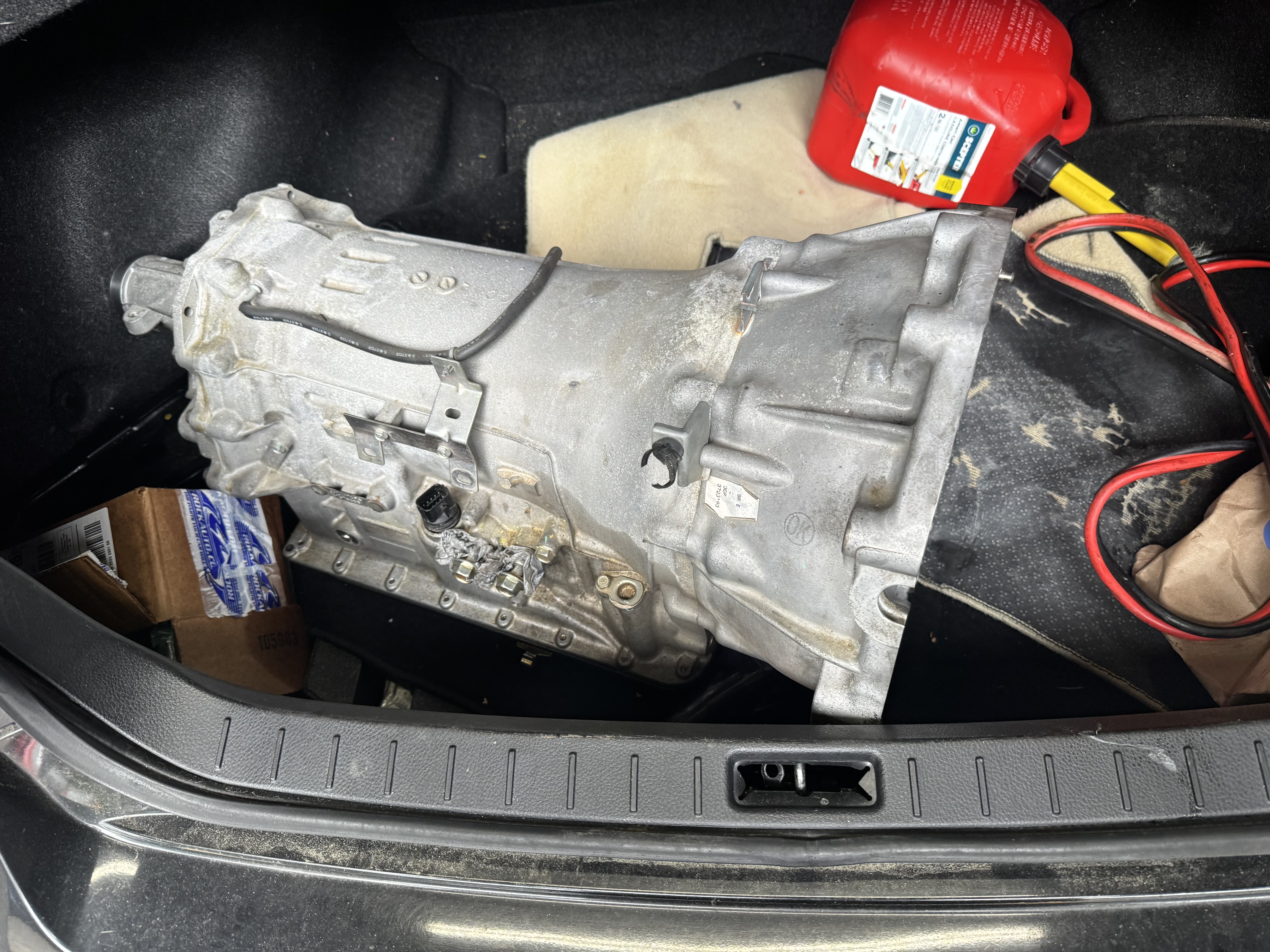
The Story: A Spare Transmission and a Second Opinion
The customer pulled in with their 2010 Infiniti G37x — and a spare automatic transmission sitting in the trunk. They'd already sourced the replacement unit and were convinced the transmission was the problem. Grinding sounds, vibration under load, handling that didn't feel right. On paper, transmission failure was a reasonable assumption. In practice, it was the wrong one.
Before we touch anything, we lift the car and look. That's not optional — it's the job. And what we found wasn't a failing transmission. It was three separate wear items in the suspension and drivetrain that, together, produced exactly the symptoms the customer described: a failed drive side CV axle, a worn wheel bearing, and a deteriorated control arm.
The transmission was untouched. The real repair cost the customer $400 in labor. A transmission swap — parts, labor, and the time to do it right — would have run several times that, and wouldn't have fixed the actual problem.
What We Found
- Drive side CV axle: boot failed, joint worn — clunking under acceleration and turns
- Wheel bearing: deteriorated — grinding vibration that intensified with speed
- Control arm: bushing worn through — handling instability and understeer
- Transmission: inspected and confirmed fully functional
What We Did
- Full undercarriage inspection with vehicle on lift
- Drive side CV axle removal and replacement
- Wheel bearing removal and replacement
- Control arm removal and replacement
- Alignment check post-repair
- Road test to verify all symptoms resolved
Why Axle, Bearing, and Control Arm Problems Feel Like Transmission Failure
The Infiniti G37x uses Nissan's ATTESA AWD system — power routes through front CV axles and rear driveshafts with active torque management. When components in this system degrade, they produce symptoms that are indistinguishable from internal transmission problems without a proper lift inspection.
CV Axle
Actual symptom: Clunking or clicking during acceleration and low-speed turns
Why it's misread: Feels like transmission slip or gear engagement hesitation under load
Wheel Bearing
Actual symptom: Grinding or humming that grows louder with speed, may shift side to side in turns
Why it's misread: Vibration through the floor and seat mimics transmission shudder at highway speeds
Control Arm
Actual symptom: Vague steering, wandering, clunking over bumps or under braking
Why it's misread: Handling instability and noise under deceleration can feel like transmission hunting or binding
This is exactly why a lift inspection before any repair matters. Replacing a functional transmission is expensive, time-consuming, and doesn't fix the actual problem. All three symptoms — the clunking, the vibration, the handling vagueness — disappeared after axle, bearing, and control arm replacement. The spare transmission went home with the customer, still unused.
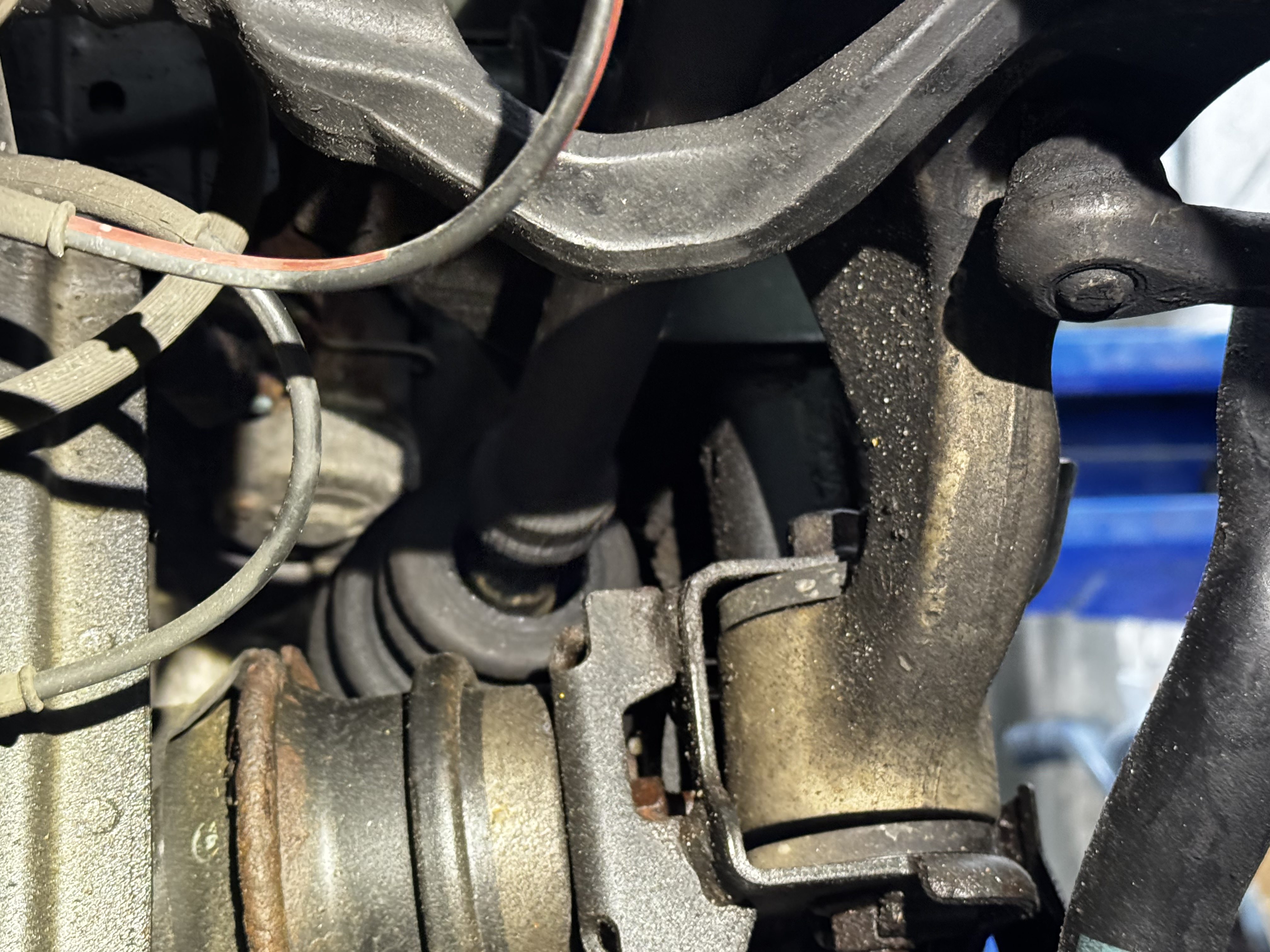
What a Lift Inspection Actually Shows
With the car on the lift, the condition of suspension and drivetrain components becomes visible immediately. A split CV boot means the joint has been running without grease — metal-on-metal wear, contaminated with road debris. A rough wheel bearing has no play tolerance: spin the hub by hand and you feel it immediately.
The control arm bushing condition tells you how the wheel is positioning itself under load. A deteriorated bushing means the geometry is shifting dynamically — which explains why the car felt unstable through corners and under braking. These are mechanical facts. You can't know them without getting under the car.
Watch the Repair — Uncut
From first inspection to final disassembly. This is what the work actually looks like.
Initial Inspection — Wheel Bearing Play Check
This is how you confirm a bad wheel bearing without any tools — grab the wheel at 12 and 6 o'clock and rock it. A good bearing has zero play. This one moved. That movement is the bearing race worn loose inside the hub, and it only gets worse under load at speed.
The grinding the customer described at highway speeds is exactly what this looks like in motion — metal moving where it shouldn't, under the full weight of the car. A bearing with this much play is also putting stress on the CV axle and the hub itself every time the wheel turns.
Step 1 — Undercarriage Inspection on the Lift
This is what the customer never sees. The moment the car goes up, the entire picture changes — suspension geometry, drivetrain condition, and wear patterns all become visible at once. You can see the control arm, axle boot, and hub assembly all in the same frame.
This is why we lift every car before recommending a single repair. A walk-around doesn't tell you what's happening at the suspension level. The lift does.
The Rust Problem — Why This Took a Torch and 10 Minutes
The axle bolts were seized solid with rust. This is what happens on a Georgia car that's seen years of road moisture, temperature cycling, and no preventive maintenance on the fasteners. You can't break these loose with a wrench — you'll round the bolt, snap the stud, or destroy the thread before the corrosion lets go.
The fix is heat. We put a torch on each bolt for approximately 10 minutes total — expanding the metal enough to break the rust bond, then backing them out carefully. Skip this step and you're looking at extracted studs, helicoil inserts, or worse. Take the time with the torch and the hardware comes out clean.
Step 2 — Torch Work on Rusted Axle Bolts
Watch the blue flame working the bolt area. The goal isn't to melt anything — it's controlled, targeted heat applied long enough to expand the surrounding metal and break the corrosion grip. You can see the glow as the heat builds.
This step alone is why labor time on rusted suspensions is higher than a clean-state repair. There's no shortcut. The torch is the shortcut — compared to the alternative of destroyed hardware and a much bigger job.
Step 3 — Drive Side CV Axle Removed
Once the bolts are freed, the axle slides out. You can see the CV joint and boot as it comes clear of the hub. The boot had already failed — cracked rubber, grease loss, and joint contamination. This is a component that was well past its service life.
A failed CV boot doesn't always produce immediate symptoms. But once the grease is gone and road debris gets in, the joint wears fast. By the time you feel the clunking, the damage is done — replacement is the only fix.
Step 4 — Hub & Steering Knuckle Assembly
With the axle out, the hub and steering knuckle are fully exposed. This is where the wheel bearing lives — pressed into the knuckle. You can see the worn surface and the condition of the surrounding hardware at this stage.
Wheel bearing replacement on a G37x requires pressing the old bearing out and the new one in. It's not a bolt-on job — it needs a press or a proper puller setup. Doing it right means the new bearing seats correctly and won't fail prematurely from improper installation.
The Bill — Transparent, as Always
Three repairs. One visit. One invoice.
Drive Side CV Axle Replacement
Removal, new axle installation, torque to spec
Labor included
Wheel Bearing Replacement
Hub assembly press-out and new bearing installation
Labor included
Control Arm Replacement
Lower control arm removal, new unit installed, alignment check
Labor included
Total Labor Charged
Parts billed separately at cost.
$400
How Our Price Compares
Labor only · Dealer estimates based on Atlanta-area market rates for 2010 Infiniti G37x
| Repair | Dealer / Chain Shop | BR Prestige Auto |
|---|---|---|
| Drive Side CV Axle | $250 – $450 | Included |
| Wheel Bearing | $300 – $550 | Included |
| Control Arm | $250 – $450 | Included |
| Total Labor (all three) | $800 – $1,450+ | $400 |
Why the gap? At a dealership, each repair is billed as a standalone job — separate teardown, separate markup. These three components share the same access point on the same corner of the car. Doing them together means one teardown, not three. We pass that efficiency to the customer. The customer also avoided a transmission swap that would have cost several times more and left the actual problem unfixed.
Diagnosis is not optional. It's the repair.
$400
Total labor charged
All three repairs — axle, bearing, control arm
$0
Transmission work performed
Because the transmission wasn't the problem
3
Root causes found and fixed
CV axle · wheel bearing · control arm
The customer came in with a plan based on the best information they had. That's not a mistake — that's what happens when you're dealing with overlapping symptoms and limited visibility into what's going on underneath the car. What matters is what happens next: whether the shop puts it on the lift and looks, or takes the customer's assumption and runs with it.
We look first. Every time. If the diagnosis confirms the customer's suspicion, we proceed. If it doesn't, we call — and we explain what we found and why. The transmission went home in the trunk, and the G37x left driving the way a G37x should.
Why Atlanta Infiniti Owners Choose BR Prestige Auto
Honest diagnostics. Transparent pricing. We fix what's actually broken.
Diagnosis Before Parts
We lift the car and inspect before recommending anything. A wrong diagnosis is an expensive repair that doesn't fix the problem. We don't do that.
Transparent, Itemized Pricing
Every repair is quoted before work starts. No line items appear at pickup that weren't discussed upfront. What we quote is what you pay.
Direct Communication
You talk directly to the person working on your car. No service writers, no phone tag, no filtered explanations. What we find, we tell you.
Efficient Bundled Repairs
Related repairs done together share teardown time. That's real savings — not discounts we inflate the base price to make look good.
Frequently Asked Questions
Common questions about Infiniti G37x drivetrain and suspension repair in Atlanta.
How can a bad CV axle or wheel bearing feel like a transmission problem on an Infiniti G37x?
Is $400 fair pricing for drive side axle, wheel bearing, and control arm replacement?
What symptoms does a failing CV axle cause on an Infiniti G37x?
How do I know if my Infiniti G37x wheel bearing is failing?
Do you service Infiniti vehicles across Atlanta, Buckhead, and Sandy Springs?
Infiniti Repair Across the Atlanta Metro
From Buckhead to Alpharetta, we service Infiniti vehicles across the entire metro area — with the diagnostic honesty that protects your wallet as much as your car.
Infiniti G37x Drivetrain & Suspension Repair in Atlanta
Symptoms that commonly mimic transmission failure: Clunking under acceleration or turns (CV axle), grinding vibration that builds with speed (wheel bearing), handling instability and vagueness (control arm). All three can appear together on a high-mileage G37x and produce a symptom picture that reads like internal transmission failure — until the car goes on a lift.
Why bundling related repairs saves money: Drive side axle, wheel bearing, and control arm work on the same corner of the car. Teardown overlaps significantly. Doing all three in one visit means paying for the access once, not three times. $400 for all three is what boutique pricing looks like when the shop isn't adding per-item markup to cover overhead they don't have.
What honest Infiniti repair in Atlanta looks like: Lift the car, inspect every component involved in the symptoms, call the customer with what you found — not what you assumed. If the transmission is fine, say so. If three wear items are the actual cause, replace them and give the customer their money back in the form of a lower bill. Browse our full service offerings or read more on our auto repair blog.
Something feels wrong? Let's find out what it actually is.
Serving Atlanta, Buckhead, Sandy Springs, Alpharetta, Marietta, and the full metro area. Honest diagnostics. Transparent pricing. We fix what's broken — nothing more.